


 Tushit Pandey
Subscribe to stay ahead with expert insights on ESOPs, smart ownership strategies, and more!
Editor’s Note:- B2C companies don’t just sell products. They shape habits at scale. From food delivery to fintech apps, the most valuable consumer companies win not because they’re clever, but because they understand how millions of small decisions turn into predictable revenue. This guide explains what a B2C business really is, how it works financially, how it differs from B2B businesses, and why execution quality matters more than the idea itself.
A business-to-consumer (B2C) company sells directly to individual customers, not to other businesses. The defining feature isn’t the product. It’s the relationship. B2C companies compete on convenience, trust, price, and emotional connection.
A B2C company succeeds only when it can repeat a small transaction millions of times. That means its growth depends less on sales talent and more on systems like distribution, retention, pricing, logistics, and brand trust. That’s why execution quality matters more than strategy slides.
This is why B2C dominates the modern economy. Global B2C e-commerce alone crossed $5.8 trillion in 2023.
That number exists because consumer behavior compounds, and B2C companies dominate modern economies.
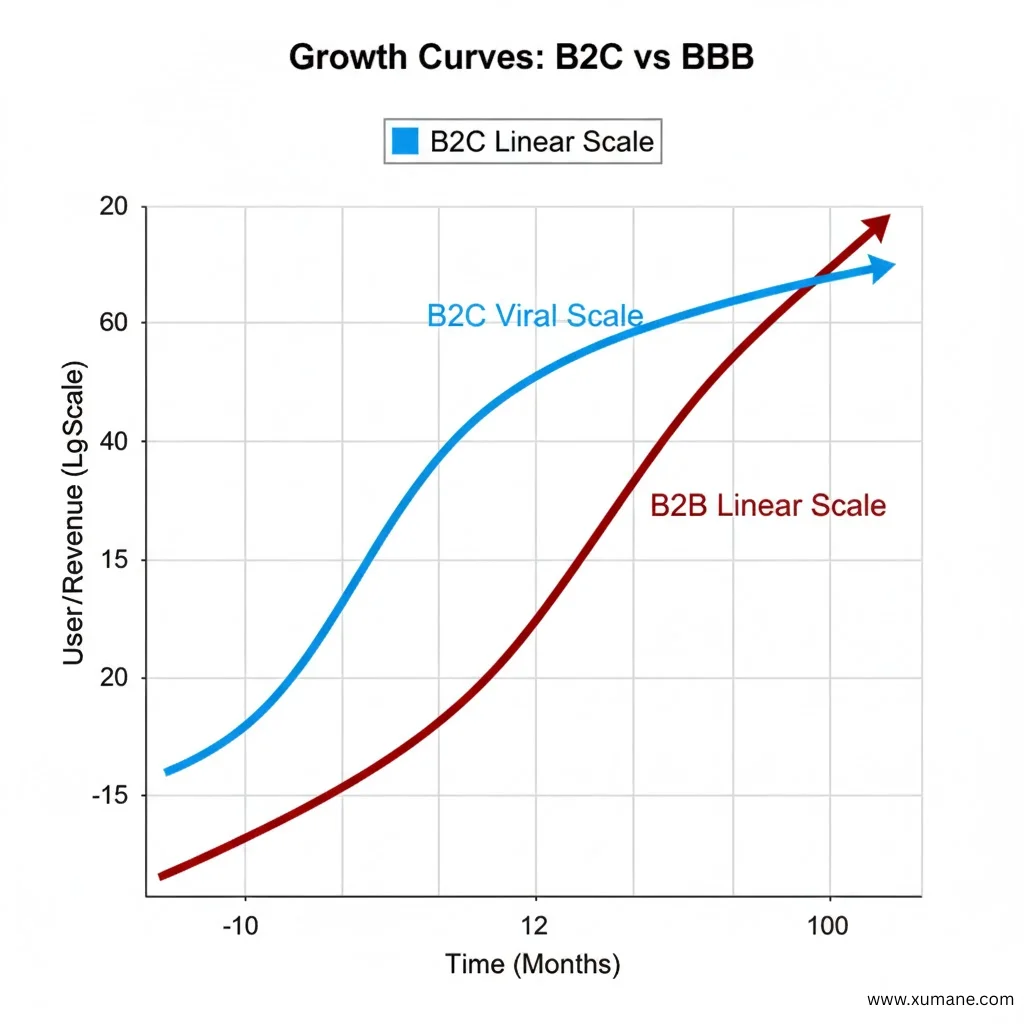
B2C companies scale through volume and velocity.
B2B businesses scale through relationships and contracts.
This single difference reshapes everything from marketing, hiring, funding strategy, to even company culture.
Here is the cleanest comparison to understand this difference better
| Dimension | B2C Business | B2B Business |
| Customer type | Individual consumers | Organizations |
| Deal size | Small | Large |
| Sales cycle | Minutes to days | Sales teams + relationships |
| Growth driver | Marketing + product | Sales teams + relationships |
| Switching cost | Very low | High |
| Decision-making | Emotional + rational | Mostly rational |
| Scaling lever | Distribution & retention | Sales capacity |
| Failure mode | High CAC, low retention | Long sales cycles, churn risk |
This is why B2C companies obsess over funnels and cohorts, while B2B companies obsess over pipelines and accounts.
The biggest misconception is that B2C success comes from viral products. In reality, it comes from operational discipline.
Customer acquisition costs (CAC) are rising sharply. Meta and Google ad prices have increased steadily as competition for attention grows. In 2021, Digital advertising costs rose over 29.8% year-on-year globally.
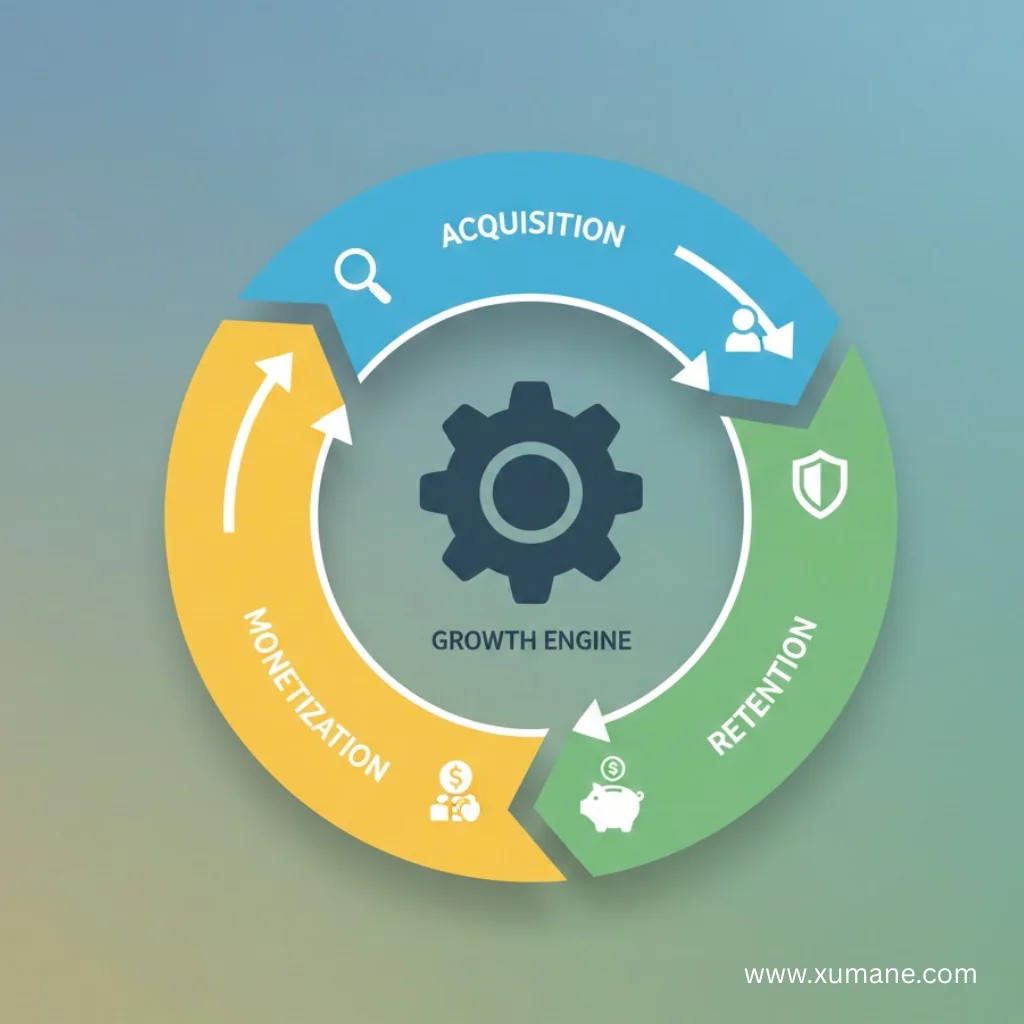
As costs rise, growth without efficiency becomes dangerous. The companies that survive are not those with the biggest launches, but those with the best economics and efficient acquisition, retention, and monetization engines.
Many B2C startups grow fast but die young. The pattern is consistent. Every B2C company lives or dies by one equation:
“Customer Lifetime Value (LTV) > Customer Acquisition Cost (CAC)”
When this breaks, growth becomes fake.
A company spends aggressively on ads. Users flood in. Revenue spikes. But retention is weak, and repeat purchases are low. Customer acquisition cost rises faster than lifetime value. Growth becomes expensive.
Research shows that increasing retention by just 5% can increase profits by 25-95%.
This is why modern B2C leaders focus more on lifetime value than downloads. Acquisition creates revenue. Retention creates profit.
Unlike B2B businesses that lock customers in with contracts, B2C markets are crowded and switching is easy. The strongest defense is not technology, it is trust and loyalty.
Brand becomes a moat.
Consumers don’t rebuy just because of price. They rebuy because of trust, familiarity, and identity. That’s why top B2C brands command pricing power even in crowded markets.
Edelman’s global research shows 81% of consumers say trust determines their purchase decisions.
In B2C, trust converts directly into revenue stability.
B2C feedback loops are fast. You know within weeks whether a product resonates. But the same speed applies to failure.
Because markets are large and entry barriers are low, competition is constant. Switching costs are minimal. One bad experience can send customers elsewhere instantly. That’s why many B2C startups grow explosively and then crash when marketing efficiency breaks.
Scale without systems is fragile. Strong systems, not just strong products, determine survival.
B2C success is not about having the best idea. It is about building a machine that can:
The companies that master this don’t just grow. They compound.
The biggest mistake founders make about B2C is thinking they are building a product. They are not.
They are building a system that influences millions of tiny decisions every day. Each click, reorder, subscription renewal, and recommendation compounds into long-term value or long-term failure.
What separates legendary B2C companies from short-lived ones is not creativity, funding, or speed. It is discipline. Discipline in understanding unit economics. Discipline in protecting trust. Discipline in building retention before chasing scale. Without that, even the fastest-growing B2C business eventually collapses under its own weight.
B2C rewards companies that think like operators, not gamblers. The brands that endure are those that turn consumer behavior into a repeatable engine and not a one-time spike. In the long run, the strongest consumer businesses are not the loudest. They are the most structurally sound.
A model where companies sell directly to individual consumers at scale.
B2C relies on volume and speed, while B2B relies on relationships and large contracts.
No. B2C grows faster but faces higher competition and lower loyalty.
Because acquisition costs grow faster than customer lifetime value.
Strong unit economics, trust, retention, and scalable systems.
Related Content